An NPR short piece aired today on “soundscape ecology” is focused exclusively on the terrestrial environment, featuring sound clips of elephants, ants, and nighthawks. Its overall point, however, is worth considering when studying the acoustics of killer whales and their environment. As the article says, “we should pay attention to the ecological characteristics of sounds and their spatial-temporal patterns.”
What does the din of underwater anthropogenic noise mean for the Northwest’s marine species — not only endangered killer whales, but also other marine mammals, soniferous fish, crustaceans, and beyond? What do killer whale calls and fish sounds mean for other species? How do our region’s marine biological sounds and underwater noises vary geographically and through time?
As we continue to study ocean sound at Beam Reach, we might consider the research agenda the authors propose for soundscape ecology:
While you can get a good sense of the Beam Reach program through the highlight video from fall 2010 or spring 2010, Erin Corra pointed us towards another fun way to get a sense of the San Juan Islands: music videos! The following two were filmed on or above San Juan Island and include some good scenery from Friday Harbor, American Camp National Monument, inland roads and forests, favorite beaches, Kenmore Air float planes, WA State ferries, and local lighthouses — including the Lime Kiln lighthouse at the Whale Watch State Park.
This year we’ll be putting new efforts into using video to share the Beam Reach experience, so consider this inspiration and a prelude…
Dave Cade recently finished editing a great highlight video with footage he, his classmates, and Beam Reach staff acquired last fall while studying endangered southern resident killer whales and their environment. We hope you enjoy the new footage! He even mixed some underwater recordings into the musical sound track.
Soundtrack credits:
(Please support these artists by visiting their sites, going to a show, or buying their music and merch!)
This is forwarded from Ed Gerstein, egerste1@fau.edu; please contact him for more information. There are 8 potential research projects listed in the ad,
from which presumably 5 postdocs will be selected. The part of the ad covering
the potential bioacoustics project is shown here. -Dave Mellinger
———————————————————————-
Up to 5 Postdoctoral Investigator positions are available for the two-year
period, October 1, 2011 to September 30, 2013. Postdoctoral research is
primarily conducted at FAU’s Harbor Branch Oceanographic Institute (HBOI) in
Fort Pierce with a member of the resident HBOI faculty, who serves as the
supervisor and mentor, with one or more co-mentors from other FAU colleges,
departments, and centers. Topics include marine ecosystem health, marine
natural products chemistry, marine mammal biology, and marine ecology.
Qualifications for Application: Applicants who have received their Ph.D. or
equivalent within three years of the date on which the postdoctoral
investigator position would commence, are eligible to apply. Recipients must
have completed their degree before the award can begin. Applicants should
submit a cover letter and a statement of interest (no more than 2 pages in
length) that addresses one or more of the proposed research projects, a CV, and
three letters of recommendation. Applicants will be selected on the basis of
the strength of academic course work, research and development experience,
publication record, letters of support, and statement of interest. Applicants
are encouraged to contact any of the mentors listed for topics of interest. An
online application must be completed to be considered for each position:
https://jobs.fau.edu/, reference position number 980126. The application
deadline is March 15, 2011.
[The bioacoustics project:]
Acoustic Behavior and Ecology of Marine Mammals
Faculty mentors:
Juli Goldstein, D.V.M., HBOI
http://www.fau.edu/hboi/ProjectManagers/JuliGoldstein/jghome.php
Edmund Gerstein, Ph.D., Charles E. Schmidt College of Science
egerste1@fau.edu or gerstein2@aol.com
George Frisk, Ph.D., College of Engineering & Computer Science
http://www.ome.fau.edu/directory/georgefrisk
The effects of anthropogenic noise on the health, behavior, energetics, and
ecology of marine mammals are shared concerns of the U.S. Navy, NOAA, USFWS,
and other regulatory agencies. This postdoc will be a part of a team that
systematically studies marine mammal bioacoustics and the acoustical
propagation characteristics of marine mammal habitats in Florida. The project
will identify, measure, and model zones of masking and other direct and
cumulative impacts from anthropogenic sources on marine mammal hearing,
biology, and behavior.
This research will capitalize on the strengths of Dr. Edmund Gerstein in marine
mammal acoustics, behavior, sensory biology, and ecology; Dr. Frisk in ocean
noise propagation, computational acoustics, and modeling; and Dr. Goldstein in
veterinary medicine and marine mammal health. This postdoc will participate in
passive acoustic data collection and subsequent analysis and in the detection,
classification, and localization of marine mammal vocalizations and associated
measurements of ambient noise and signal propagation within the Indian River
Lagoon system, and other estuarine and coastal habitats along east Florida. The
postdoc should have a skill set that includes acoustic signal processing,
computer programming, and proficiency with MATLAB tools.
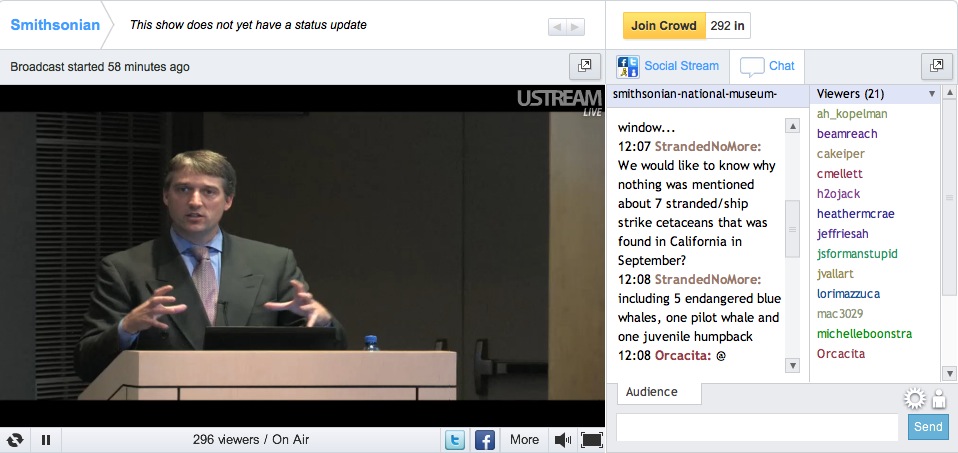
Brandon Southall gave a great synopsis today of an impressive study (SOCAL-10) of how cetaceans respond to simulated sounds, including mid-frequency sonar. (Edit 1/20/11: recorded lecture is at http://www.ustream.tv/recorded/11956611 ) Responses were assessed using data from a suite of instruments, including passive acoustic monitoring and tags attached to the animal that reported position at the surfaces, as well as underwater depth, heading, and received sound level.
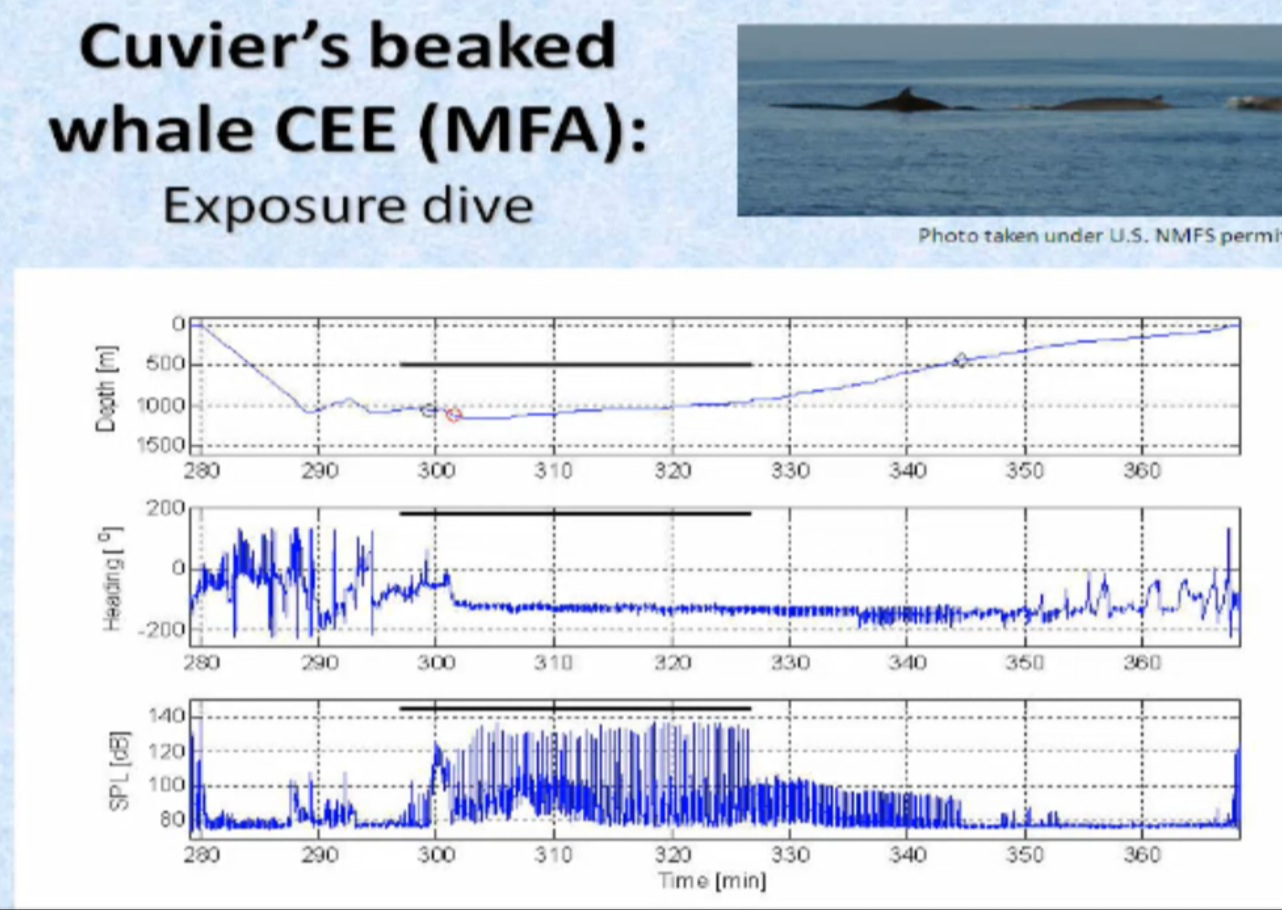
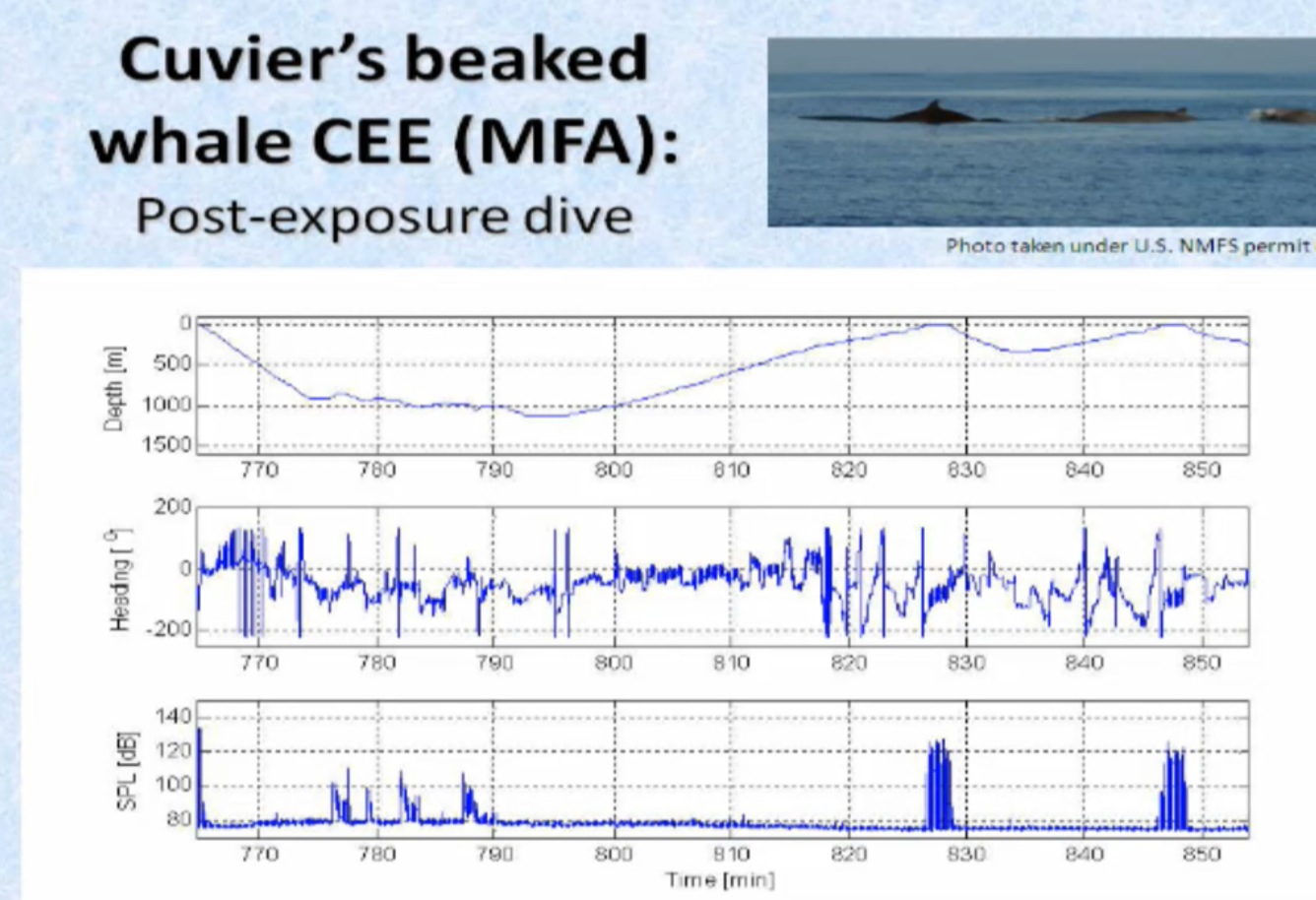
The highlight from my perspective was that different cetaceans off the coast of southern California seem to respond differently to the simulated sounds.   While a sperm whale showed no mid-dive response to simulated mid-frequency sonar (210 dB 15-element vertical source rather than the military’s 235 dB 30-element source), a beaked whale showed a strong response mid-dive — it suddenly switched from swimming around in different directions to swimming faster (more flow noise) on a steady heading (see screen-grabs below).
Southall commented during his talk that “Beaked whales, like harbor porpoises, seem to be particularly sensitive.” In the interesting back story provided by the Smithsonian, Southall similarly noted that in the Bahamas “beaked whales seemed much more responsive than other species, like pilot whales.”
An outstanding question posed by Brandon today as he presented the slides shown below is whether or not the beaked whale was swimming away from the SOCAL sonar source or not. In these Matlab plots, the exposure is denoted by the black bar. I think the red circle represents the time when the sonar sounds were first emitted (at full source level?).
A dive during which whale was exposed to simulated sonar and responded with increased flow noise and steady heading
Post-exposure dive has little directed swimming except during ascent (as did the pre-exposure dive)
It seems an answer could be derived by estimating the beaked whale’s speed from the flow noise time series and then combining it with the heading data to estimate the whale’s track underwater. If the location of the whale when it dove is known (even roughly) relative to the sound source, then it may become clear whether the whale headed away from the source or not. From about the onset of the exposure for about an hour the animal was headed between -90 and -180 degrees.
Assuming a heading of 0 degrees represents magnetic or true north, the bulk of the response movement was to the southwest. The descent included some slow turns throughout the compass points, but was also predominantly to the southwest or northwest with the highest speed sections (based on the flow noise increasing with speed) occurring when the animal was headed generally southwest. So, if the source was east (or maybe north) of the dive location, then the response was probably away from the source. If the source was west or south of the dive location, then the response may have been toward the source…
Also, in the question session within the uStream chat window, a user named strandednomore posed a provocative question which went un-answered:
We would like to know why nothing was mentioned about 7 stranded/ship strike cetaceans that was found in California in September? Strandings included 5 endangered blue whales, one pilot whale and one juvenile humpback. Prior to SOCAL-10 and Navy tests in San Diego nearly no cetaceans stranded in California from January up to August, then suddently we had 7!
Overall, this was a great use of streaming video. Thanks to Orca Network for the Facebook reminder to tune in and a suggested improvements for the Smithsonian folks: clarify how virtual audience members should submit questions; respond to audience comments in the ustream chat window; provide a link to the archived recording immediately after the broadcast ends.
It turns out the sounds are made by the black drum to attract mates during spawning events. By “drumming” their sonic muscle — the fastest muscle known in vertebrates — against its swim bladder about 200 times per second, it generates a sound akin to a heartbeat. According to the abstract of Jim Locascio’s doctoral thesis (advised by David Mann at the University of South Florida), the black drum sounds are surprisingly loud:
Source level estimates averaged 165 dB RMS re: 1 microPa (SD=1.0) (n = 1,025). Call energy was concentrated in the fundamental frequency (94 Hz) and first two harmonics (188 Hz and 282 Hz).
At Beam Reach, one of our 2011 resolutions is to identify the source of a variety of grunts and groans that we often hear in the Salish Sea. We suspect many of them come from fish like rockfish and midshipmen, but we’re still narrowing down the list of soniferous (sound-producing) fish of the Pacific Northwest.
If you know about local fish (or other marine animals besides mammals) that make sound, or if you have recorded mysterious sounds that you suspect may be fish, please let us know in the comments. For the curious, here are some “mystery” sounds recorded in the Salish Sea — some of which may be coming from marine fish — while listening to the live hydrophone network we help run. One to listen for is a “chorus” of fish calls that often occurs in temperate waters within a couple hours of dusk or dawn.
Martha Baskin of Green Acre Radio (on KBCS) put together a story about “Orcafest 2010,” an event welcoming the southern resident killer whales back to Puget Sound this winter, organized by The Whale Trail and Killer Whale Tales. The piece features music and explanations from Duwamish tribal members, and quotes about the orcas from Donna Sandstrom, Darcie Larson, Scott Veirs, and Brad Hanson.
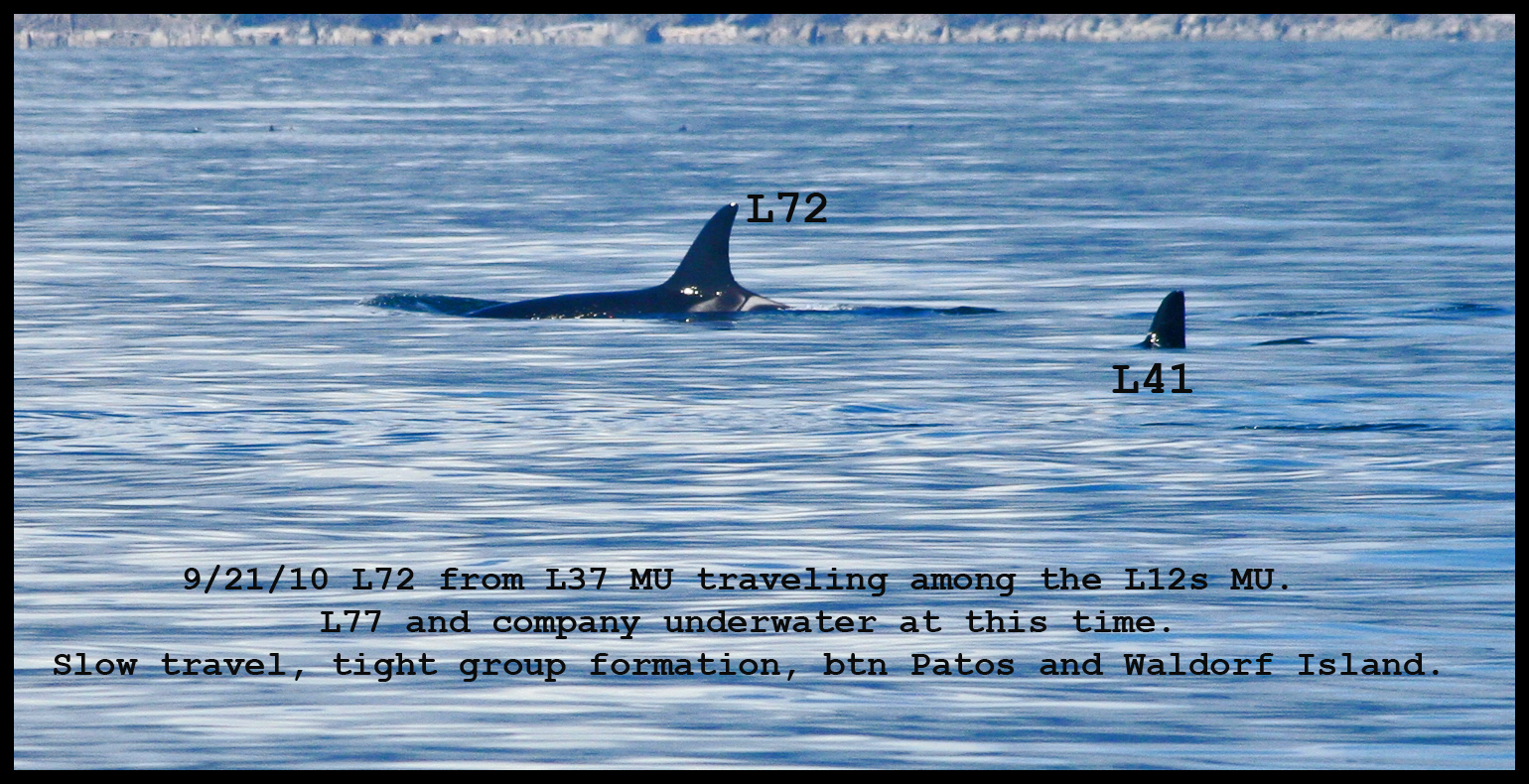
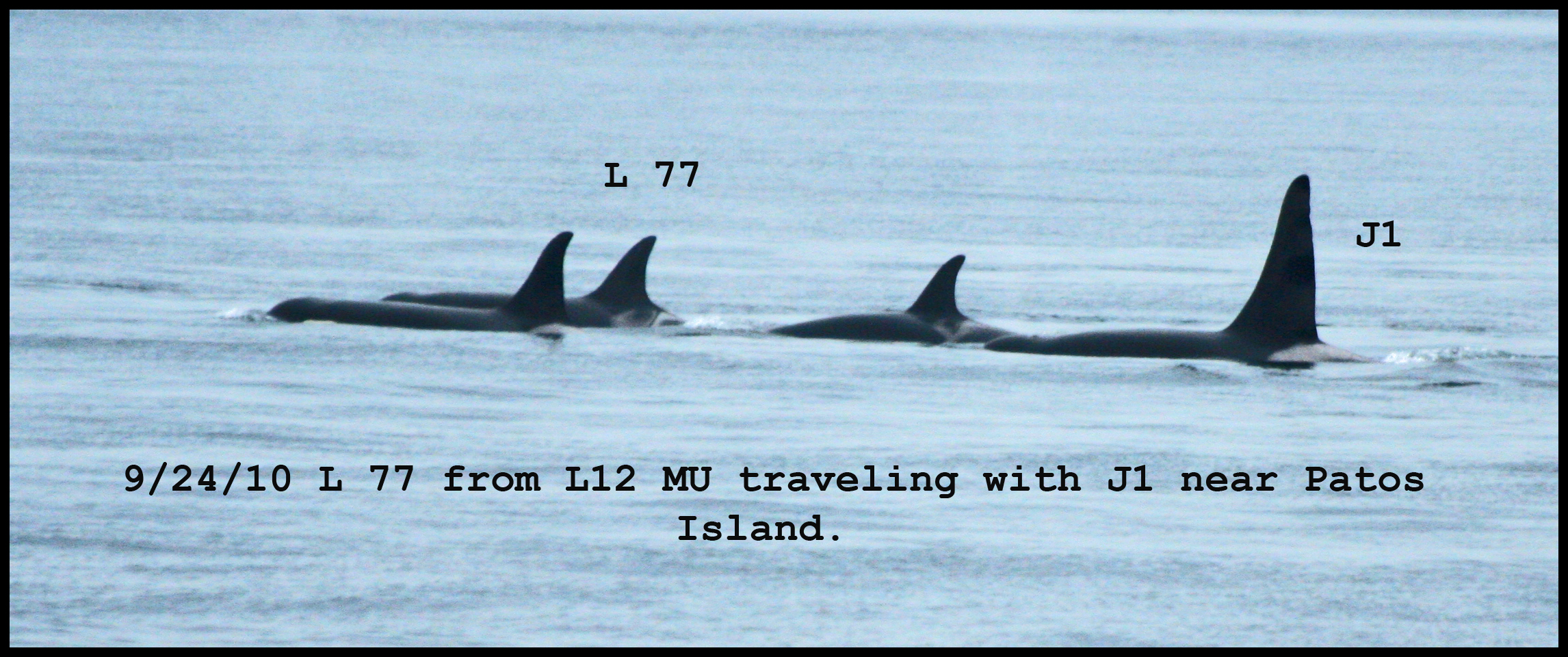
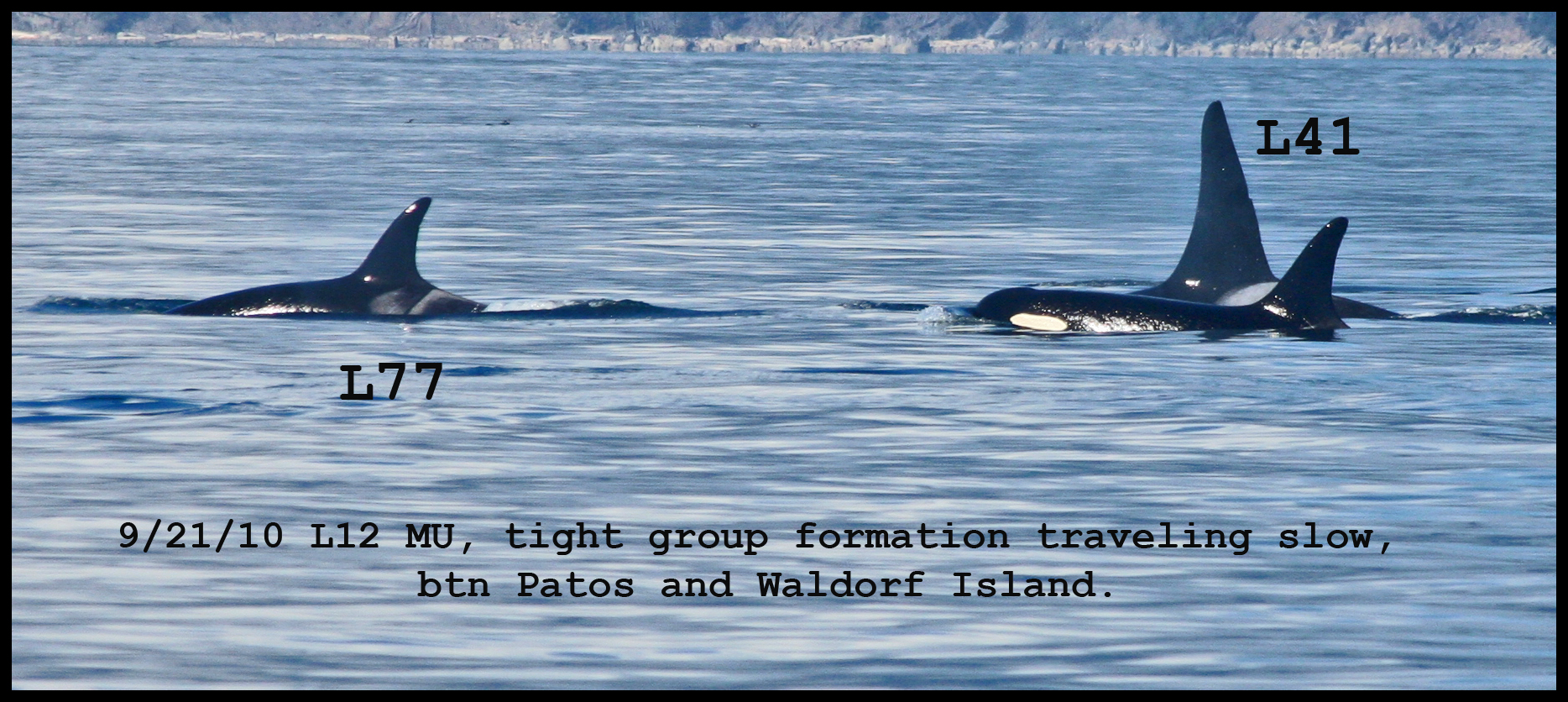
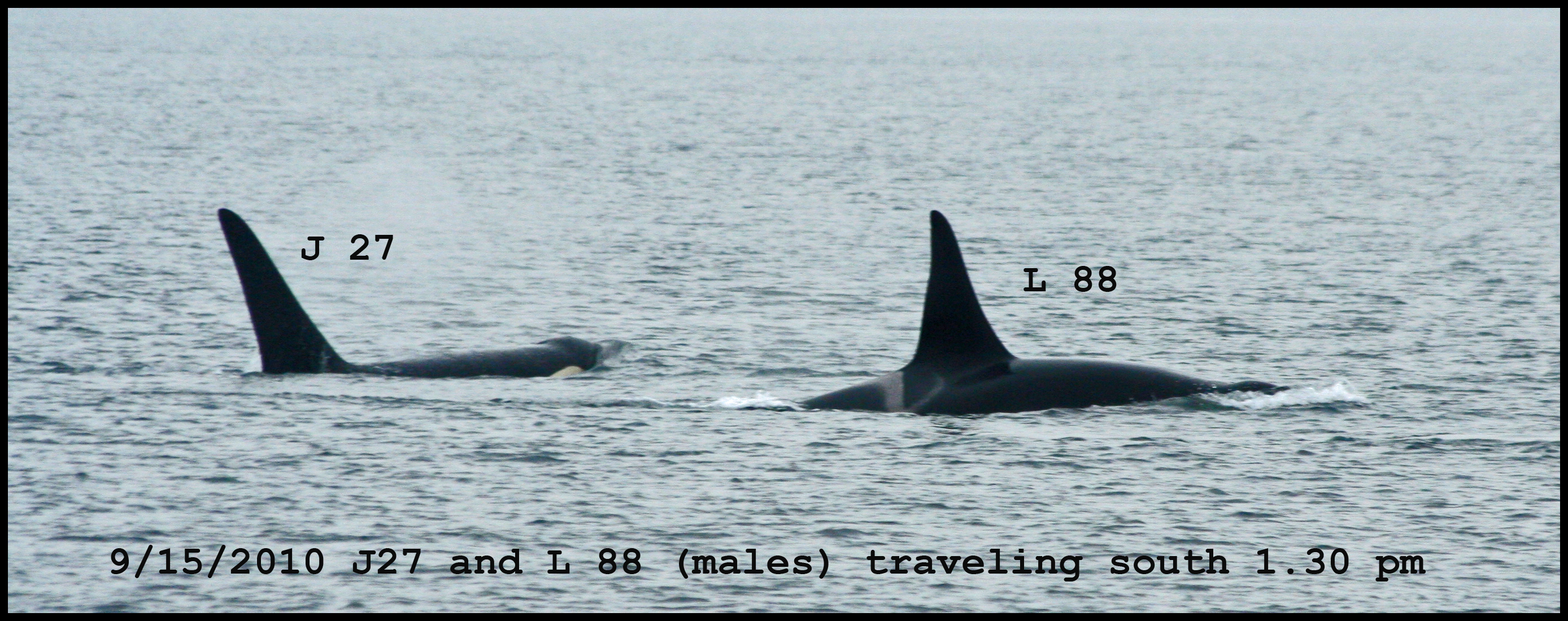
During our great and enlightening journal club discussions, in which each student leads the discussion on one of the seminal articles for their own project, we learned some new categories used to estimate the extent of the social role that a given individual can exert over a group. One of this categories is known as “betweenness” and it measures how often a given individual is found in between clusters. An individual with a high level of “betweenness” is then expected to be an “information broker” in cetacean societies. Another related category is known as “degree.” The degree of an individual is the measurement of its influence on its peers.
The betweenness and degree levels of our SRKWs has never been fully studied. However, during our research we were lucky enough to catch some of these interactions. Our photographic record revealed some of these events, in which matrilines across pods mixed with each other or individual whales joined different matrilines.Â
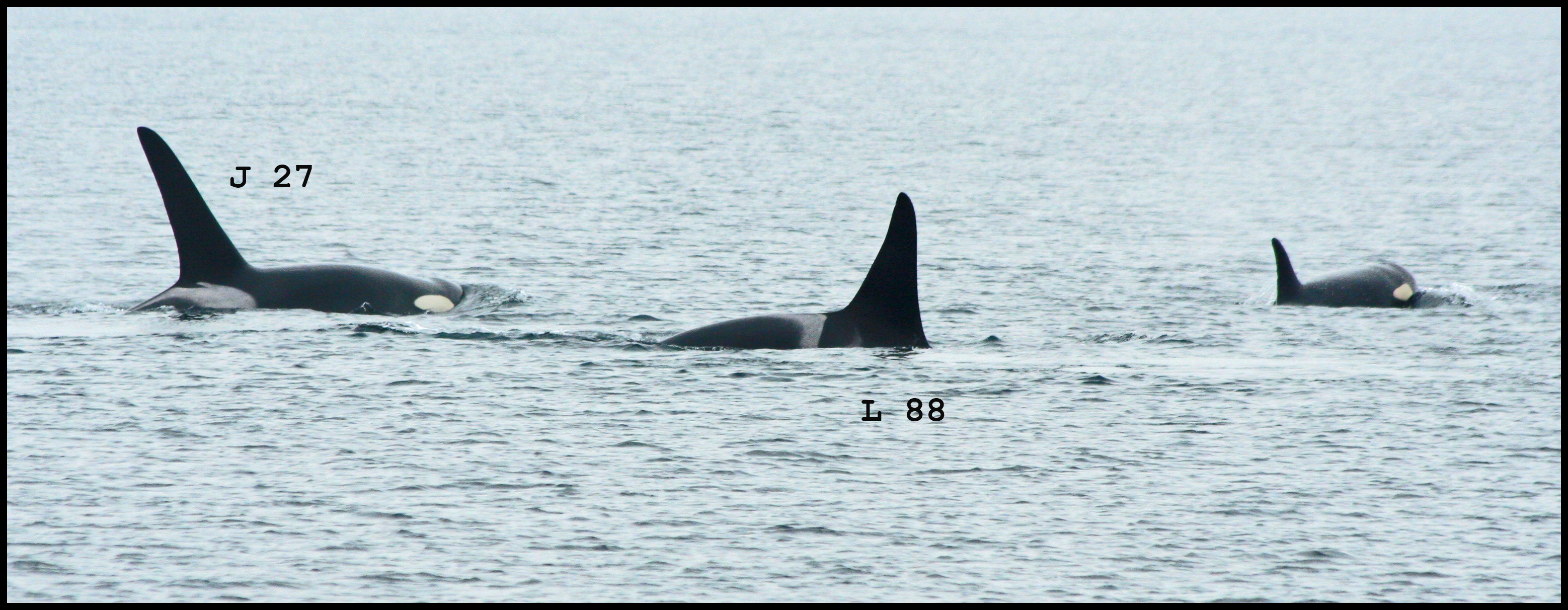
Some of the biggest “wonderers” observed during our 5 weeks at sea were J27 (male), J1 (male), K21 (male), L 77 (female), L72 (female).Â
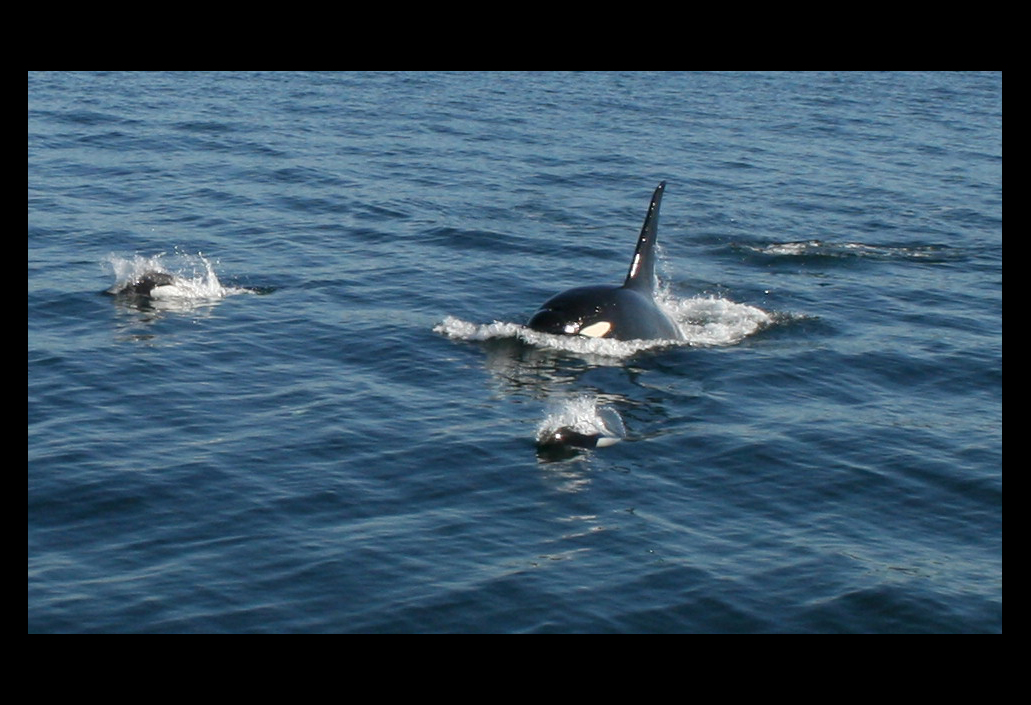
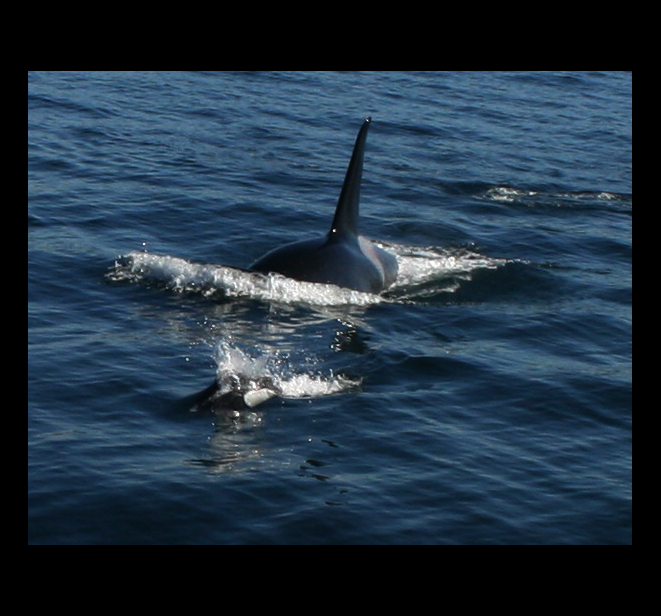
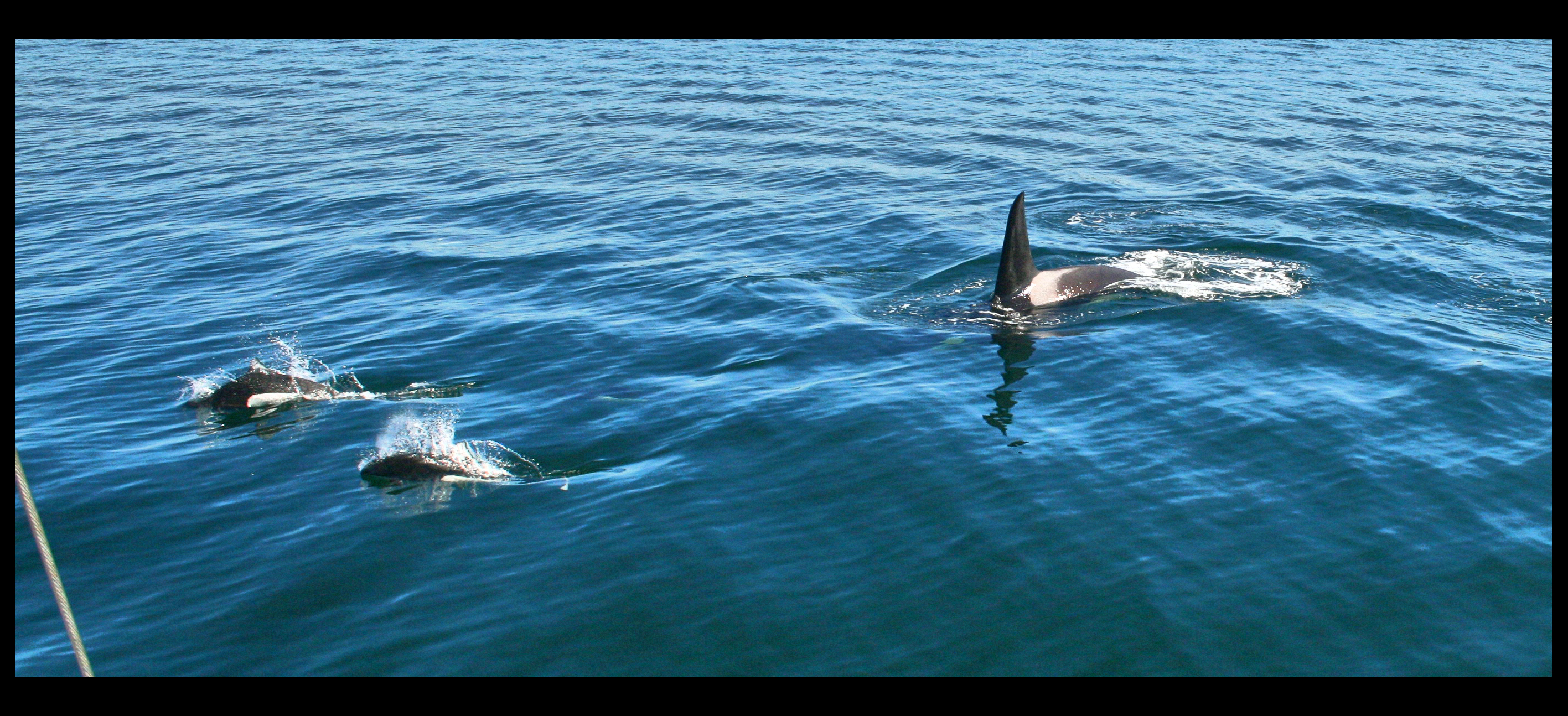
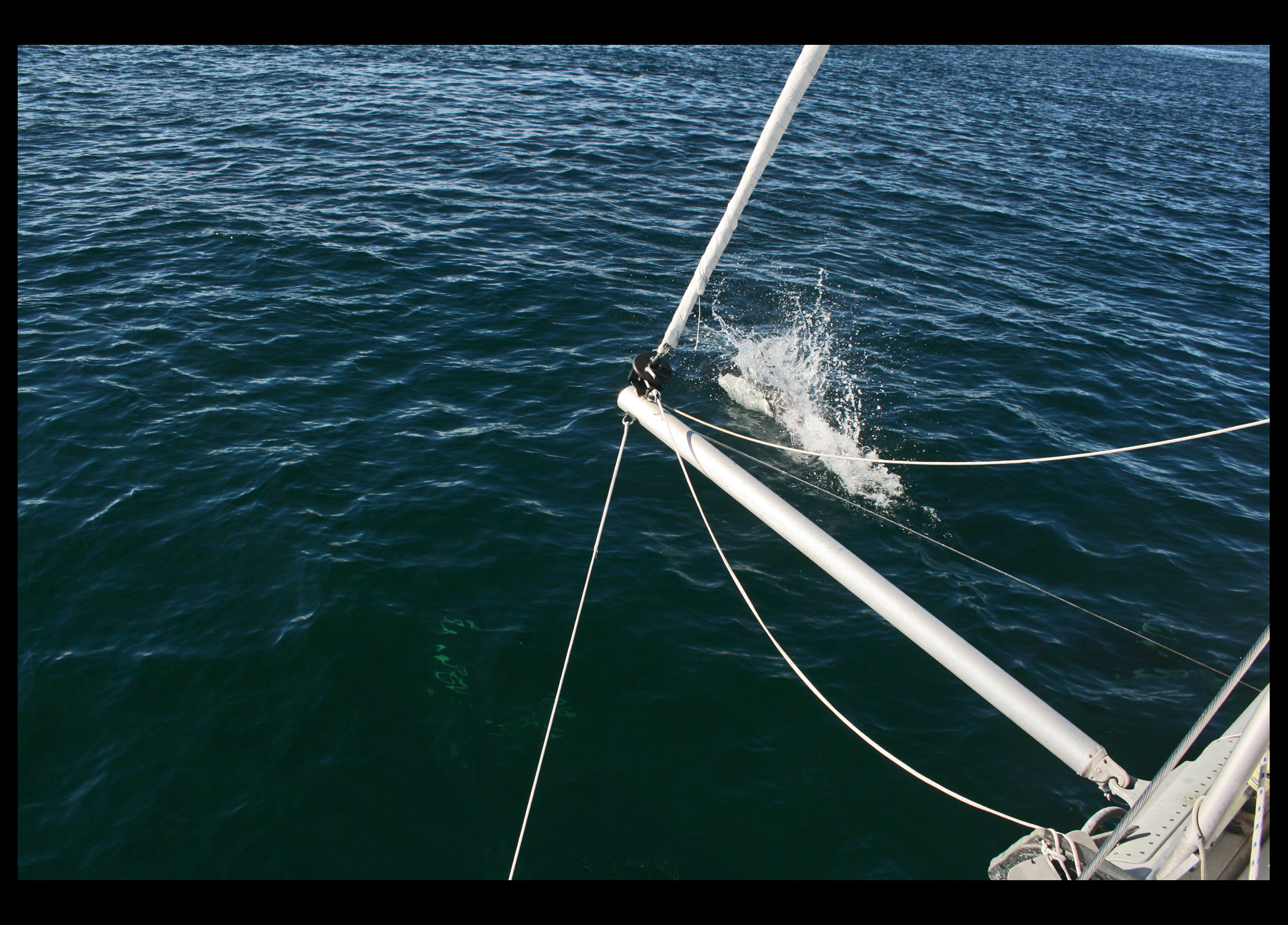
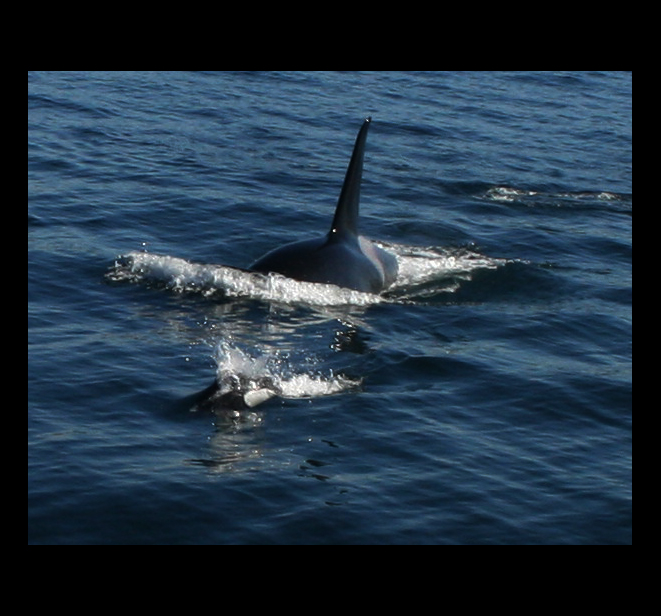
Flat, mirror like waters were suddenly broken by the splash of Dall’s porpoises swimming around a large male killer whale. These creatures seem to have the adrenaline-addiction gene. Riding the bow wave of an orca is not exactly the best idea for a cetacean one seventh of their size. Although our resident whales are fish eaters, there have been accounts of instances in which southern residents have killed Dall’s porpoises while at play. Whether a challenge or a game, the Dall’s seemed the most interested in the interaction as the killer whale seemed to zig-zag her path trying to shake them off.
Whatever the reasons behind this dangerous game, to us humans it was like seeing a mini-orca and a full sized one side to side, sizing each other up, comparing dorsals, comparing speed…or perhaps simply having a profound inter-species recognition. Dall’s have never been preyed upon by southern resident killer whales, so it is conceivable that the few deaths reported from “play-like†interactions were just unfortunate consequences from the orca’s inability to measure its own strength against their much smaller “play-mateâ€. The short, playfull and peaceful  interaction we were able to witness was certainly awe inspiring.
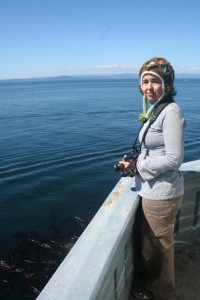
It’ s time to choose your own adventure with Beam Reach. Decide what to eat for breakfast, contemplate your research priorities, attend to the ship’s systems, and — maybe just maybe — get a chance to study wild killer whales.
Just click here or on a photo below to navigate through a day-long experience as one of the six Beam Beach students.













 Twitter
 LinkedIn
 Facebook